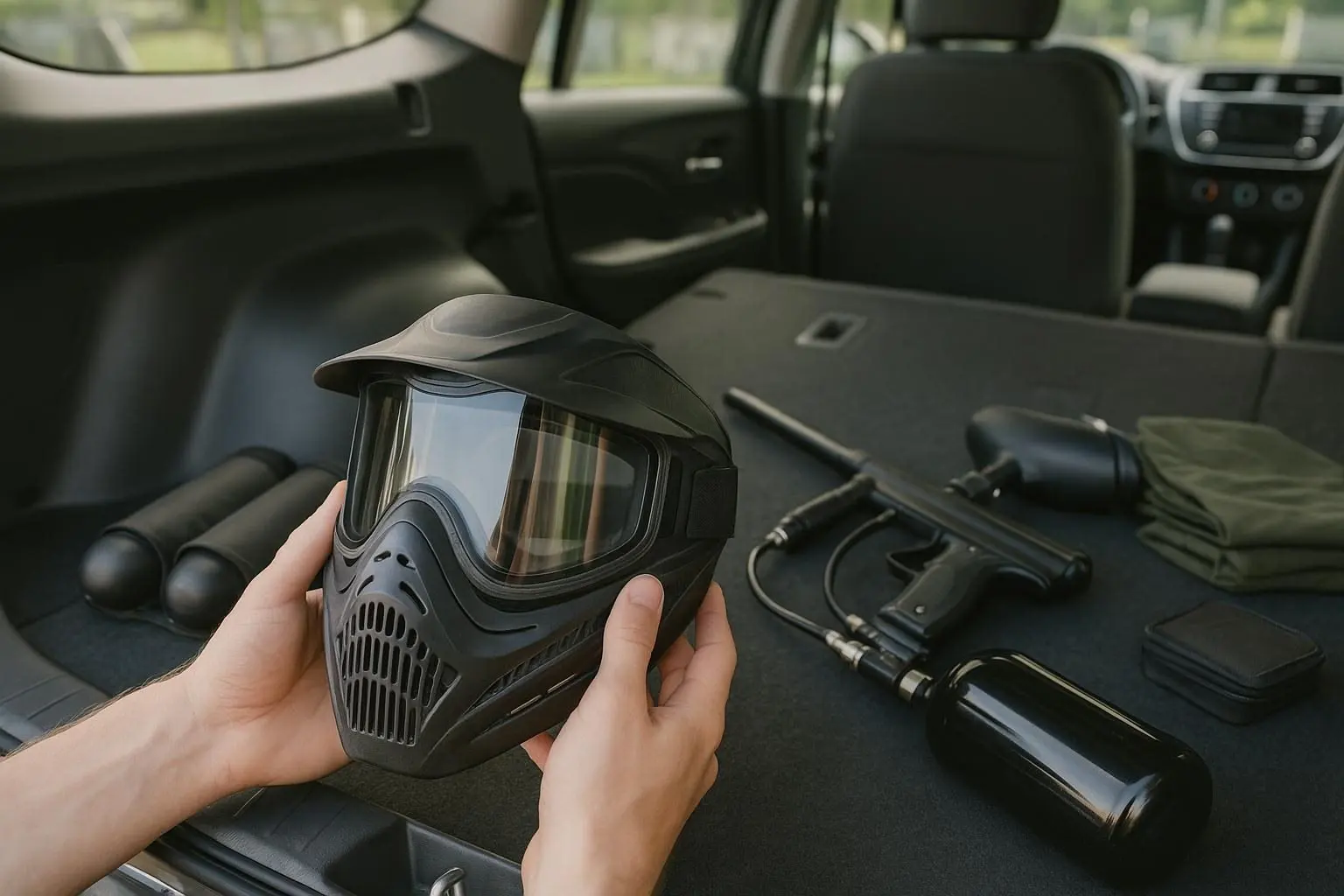

Decide what must work before deciding what looks impressive. For a first session, the useful question is not how to copy someone else's setup, but which items keep you protected, comfortable and within the field's rules. A practical paintball loadout can grow over several visits, giving you time to learn what you need instead of buying equipment that stays in a kit bag.
Start with the field, not the shopping list
The same equipment may be suitable at one venue and unsuitable at another. Before buying anything, check the field's current rules for approved markers, protective equipment, paint or ammunition, clothing, barrel covers, air systems and chronograph procedures. Rental packages may include some items, while other sites require specific protection or field-supplied consumables.
This check is the first equipment priority because it prevents expensive mismatches. A marker that cannot be used, a mask that fails the venue's requirements or a tank with an incompatible connection is not a bargain. Rules can vary and change by location, so confirm details with the field and consult current official guidance where relevant.
For our first-time player, the first purchase is not a marker. The field rents markers and air systems but requires every player to use a properly fitted full-face mask. Renting the larger items for one visit makes sense until the player knows how often they will return and what style of play feels comfortable.
Put vision and fit ahead of upgrades
Paintball eye protection is non-negotiable. Use a mask designed and rated for the activity, and keep it on wherever the field rules require it, including areas where live play may resume. Never remove it to wipe a lens during a game, and do not substitute ordinary safety glasses for a complete paintball mask.
Fit matters as much as the label. The mask should sit securely without painful pressure points, provide a clear view when you turn your head and leave enough room for normal breathing. Check that the lens is clean, undamaged and firmly retained. Fogging can make a session frustrating, but improvised alterations to the lens or frame are not safe. Use only cleaning products and replacement parts approved for that mask system.
If airsoft is also part of your plans, do not assume every airsoft eye-protection arrangement is accepted at a paintball venue, or vice versa. Ask the operator which face and eye-protection standards and coverage they require.
Buy the basics in the order they solve problems
After protection, spend on items that improve comfort and reliability across several sessions. Secure footwear, clothing that allows free movement, gloves if they improve grip, and a way to carry water are more useful than decorative accessories. Clothing should suit the field and weather without loose parts or trailing straps that can snag.
The player in this example borrows or rents the marker, air system and hopper, then buys a mask, supportive footwear and a small way to carry essentials. On the next visit, borrowed equipment fits poorly and cleaning supplies are missing. Those observations determine the next purchases better than a reviewer's favorite upgrade.
Use this paintball gear checklist before moving to optional items:
– Approved, well-fitting full-face mask with a clean, intact lens
– Marker, air system and hopper compatible with the field's rules and connections
– Barrel cover and any required safety equipment
– Comfortable clothing and secure footwear suited to the venue
– Water, a small towel and a way to store keys or other essentials
– Manufacturer-approved cleaning supplies and basic spares
A load-bearing vest, electronic accessory or specialized carrying system may be convenient later, but each should answer a repeated problem. If it does not improve comfort, reliability, safe handling or compliance, it can wait.
Make maintenance part of the purchase
A new item is useful only if you can keep it serviceable. After a session, follow the manufacturer's instructions for unloading, degassing and cleaning the marker and air system. Wipe away paint and dirt, inspect seals and connections for obvious damage, and store equipment dry and protected from heat, moisture and impact. Never disassemble a pressurized system or modify a safety component because a shortcut seems convenient.
Maintenance symptoms are often clear. A lens that repeatedly fogs may need proper cleaning, a better fit or an approved replacement lens. A marker that becomes inconsistent, leaks or fails to cycle should be removed from use and checked according to its manual or by a qualified technician. Do not try to increase performance through unsafe modifications or by bypassing field safety procedures.
Keep a short record after each outing: what was rented, what felt uncomfortable, what fit poorly and what needed cleaning. This turns vague shopping urges into useful evidence. If the mask stayed clear and the borrowed marker worked well, neither needs replacing first.
Let field rules shape responsible play
Equipment cannot compensate for poor judgment. Attend the safety briefing, follow referee instructions promptly and observe the boundaries between playing areas, staging areas and safe zones. Keep the barrel cover in place where required, treat every marker as ready to fire, and never point it at someone outside the permitted play area. If you are unsure whether a game has stopped, stop and ask.
Sportsmanship belongs in the loadout because it affects the whole day. Call yourself out when a hit is clear, avoid arguing over marginal shots, and report equipment or safety problems rather than improvising around them. Do not overshoot, fire at close range when prohibited, or use a damaged mask, hopper or air system to finish a game.
After several sessions, review the setup instead of automatically adding to it. The right next purchase might be a better-fitting mask, a replacement lens, maintenance supplies or nothing at all. Building gradually keeps the focus on safe participation, dependable equipment and enjoyable play-the priorities that remain useful long after the novelty of a new accessory fades.